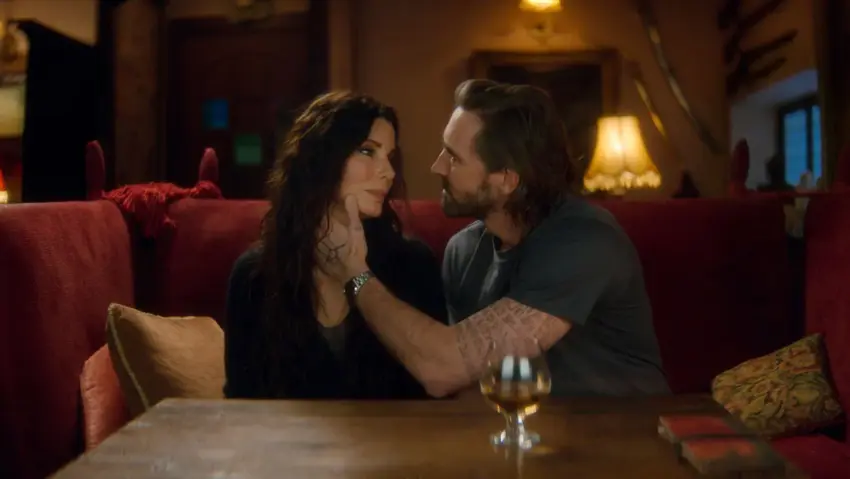
Everyone, consciously or not, has an actor to whom they’ve sworn allegiance based on one, formative role. Lee Pace is mine, and he earned my loyalty on Pushing Daisies as Ned the pie-maker who can raise the dead with his touch. He established himself in my fourteen-year-old mind as the ultimate romantic lead; talk to me about yearning after you’ve watched Ned stare longingly at the undead love of his life, whom he can’t touch without sending her back to the grave. Although I spent my teenage years regularly rewatching Miss Pettigrew Lives for a Day mainly for Mr. Pace, his career has leaned away from romantic leads for a while now. I’ve always assumed this was due to some combination of trends in 2010s Hollywood rejecting romance and the lingering (incorrect) assumption that audiences won’t accept openly queer actors playing straight.*
So you can imagine my delight when I found out that Pace had been cast in Practical Magic 2, seemingly as a love interest for one of the Owens sisters. Yes! Let this man yearn again! As per a curse outlined in the first film, any man who wins the love of an Owens woman dies, so I figured there would be angst and unrequited longing aplenty. I was disappointed when I finally saw the film.
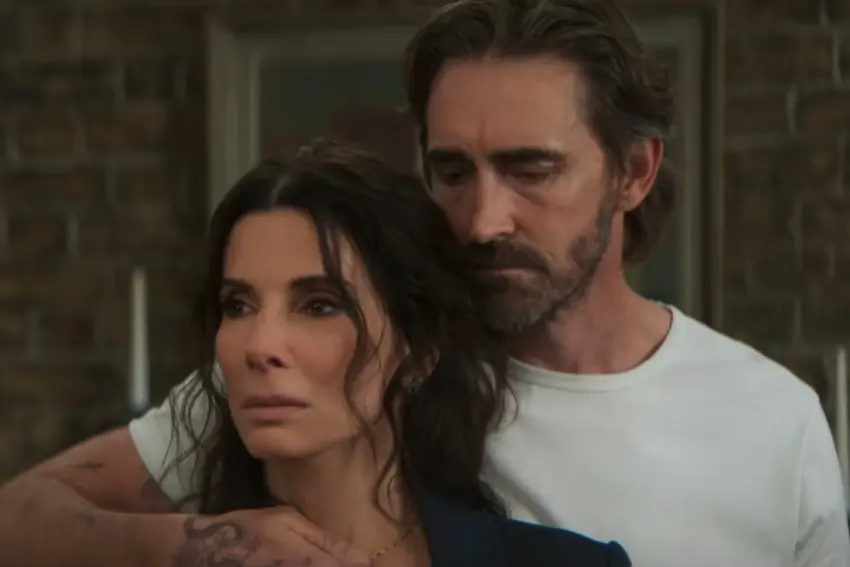
On the whole, Practical Magic 2 is a pretty dreadful legacy sequel chock full of baffling narrative choices. It misunderstands the appeal of the first film and therefore cannot recreate or tap into it. I left the theater wondering what the hell went wrong, but I must refrain from listing everything I disliked about this movie lest I steer us completely off course. My main complaint for the purpose of this rant concerns, of course, Professor Ian Wright, Pace’s character in the film. I will start by saying that Pace is innocent, doing his best in a bizarre role and pulling off a profusion of fake tattoos magnificently. Professor Wright is a London-based academic of the occult—and sometimes practitioner of witchcraft himself—who Sally (Sandra Bullock) and Gillian (Nicole Kidman) believe can help break the aforementioned Owens family curse. Ian immediately falls head over heels for Sally, who initially refuses his attentions after losing two husbands to the curse. By the end of the film, the curse has been broken, and Sally can fully love Ian without killing him.
Despite Pace’s sincere efforts, nothing about Professor Wright worked for me, sexually or otherwise. And the more I thought about it, the more the character actively bothered me. I couldn’t put my finger on why. At first, I thought it was the complete lack of a written personality. A thinly-written male love interest who does absolutely nothing but yearn might be the gender-swapped equivalent of a thinly-written female love interest with huge tits. It’s a lazy shorthand, a tossed off, “This is what you guys like, right?” But as irksome as I find this trend (and it is a trend), this wasn’t it. I can accept a bone thrown when the bone looks like Lee Pace’s exquisitely lovelorn face.
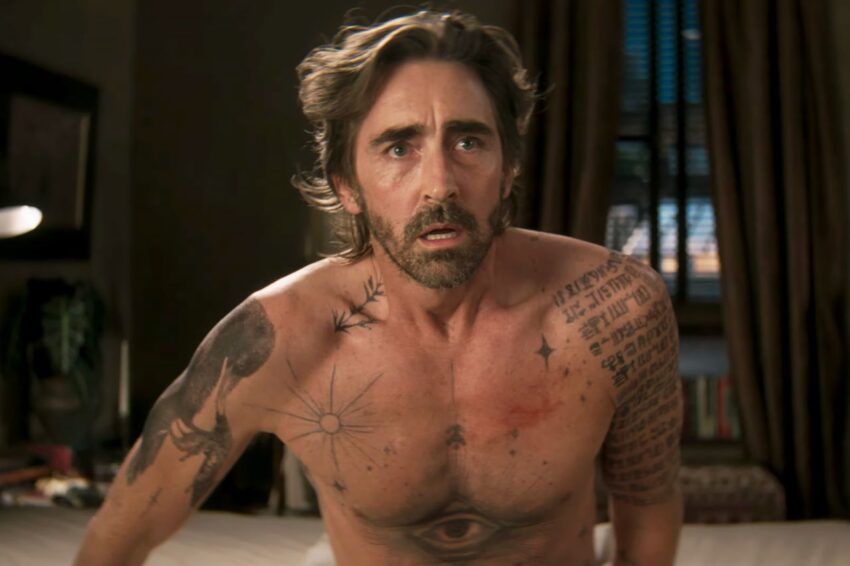
Because the script does, in fact, hint that Professor Wright was meant to have a personality. By all indications, he was supposed to be a bad boy, or at the very least have a bad boy aura. The tattoos function as a visual tip off, but the real clue lies in an extremely half-hearted subplot about Ian’s penchant for dabbling in dark magic. For a brief section of the film, the Owens sisters suspect that Ian might be the villain, or at least in league with the villain. This is laughable, as the nakedly earnest professor has done nothing remotely wrong. Recognizing Professor Wright as a weak sauce bad boy clarified my irritation immediately.
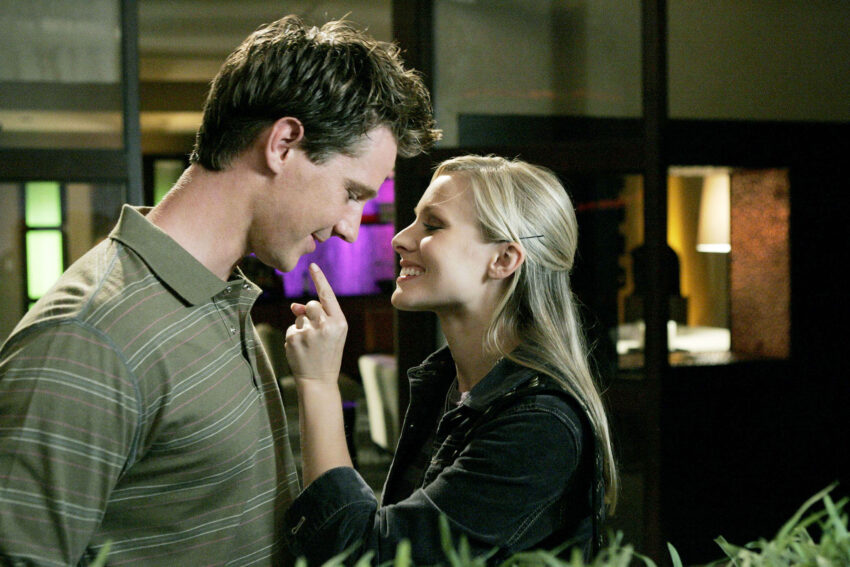
You see, previously unrelated to Practical Magic 2, I had been watchingVeronica Mars for the very first time. Teen soaps from the aughts are my comfort shows; The O.C. should have been on that New York Times Best TV Shows of the 21st Century list, as far as I’m concerned. For whatever reason, Veronica Mars escaped me during my heavy binge-watching years, but I’ve finally come around to it. I love it, for the record. But pertinent to this conversation: Logan Echolls (Jason Dohring), Veronica’s (Kristen Bell) on-again-off-again boyfriend, belongs in the pantheon of All-Time Great Bad Boys.
There’s nothing like a dose of Logan to remind you how good we (read: the connoisseurs of terrible fictional men) used to have it. The bad boy cannot simply be inked up and have supposedly tried his hand at black magic with no repercussions. For the bad boy to work as a romantic archetype, he must actually be a piece of shit sometimes. He sports a DGAF attitude that leaves a trail of destruction in his wake, including a string of heartbroken exes. The bad boy, so unaffected by most things and driven by his own personal code, gets destroyed by love or lust for a good girl. And he knows, deep down, that his own assholery is the thing that keeps his love unrequited. So he shows his secret heart of gold only to the object of his affection, in an effort to win her approval and assuage some of that sweet, sweet self-hatred.
For a while, the bad boy was a television staple. I’m talking Spike on Buffy, Eric Northman on True Blood, Damon Salvatore on The Vampire Diaries (although he is a camp version), hell, even Jaime Lannister on Game of Thrones (sorry if my freak is showing with that one). Tim Riggins on Friday Night Lights! Some would lump Jess Mariano on Gilmore Girls in with the bunch, but—hot take—Logan (Huntzberger, not Echolls) is the bad boy by my definition. Maybe that’s why I always liked him best.**
Bad boys do yearn. They’re fantastic at it. But in this context, their yearning becomes almost pathetic. To put it crudely and simplistically, these men are bottoms who sincerely believe they are tops. Watching them pine away because they can’t just take what they want like they usually do is totally hot. This is what makes a bad boy work so deliciously well as a romantic lead, what gives the bad boy’s yearning its extra oomf. If you take away the actual bad behavior, then all you’re left with is Amnesia Eric, which was truly the cruelest way to snuff the spark of my favorite True Blood pairing. (I’m still not over it, if you can’t tell.)
Sure, the bad boy as a romance hero is a little problematic in our age of heteropessimism. The bad boy invites and allows viewers to wholeheartedly enjoy what’s bad for them. He only works as a fantasy in which you, as a viewer, don’t have to assume any real risk in desiring him. He can’t hurt you. He’s not real. But still he’s a bad example, even in fiction. The bad boy’s allure hinges on a mild fantasy of “I could fix him” domination, feeding the ultimate heterosexual delusion that the right woman can bring even the most impervious jerk to his literal and metaphorical knees. He’s not, in short, wholesome, that loathsome word.
Interestingly, the first Practical Magic had something to say about what happens when you get involved with a bad boy in real life. Adventurous Gillian becomes trapped in a relationship with wannabe Dracula Jimmy Angelov (Goran Visnjic) when what started out as hot sex turns into obsession and physical abuse. Sally comes to a motel to rescue Gillian, but when Jimmy catches them before they can drive off, Sally accidentally kills him in a desperate attempt to get her sister away from him. Then Jimmy’s vengeful spirit haunts them until they harness the power of sisterhood to dramatically exorcise it at the end of the film. That’s what you get for thinking you can handle a flesh-and-blood bad boy, ladies.
So why, then, is Professor Ian Wright bad boy coded if Practical Magic 2 won’t commit to the bit? Why can’t he be the anti-Jimmy, the fantasy antidote to the disappointing reality? Why is he paired with Sally and not Gillian? Who in God’s name approved this script??
Unfortunately, bad boys are out of fashion. It’s already slim pickings out here lately for those of us who enjoy a bad boy, and I think that’s what pissed me off so much about Ian Wright. The audacity. Don’t tease me with a bad boy and deliver me a cinnamon roll! I’m not going to say no to a cinnamon roll (pastry or character type), but I don’t want them shoved down my throat. Until bad boys make a true comeback, at least I’ve got my LoVe to keep me warm.
*While I firmly believe that it’s never okay to out someone, I will admit that getting accidentally outed by Sir Ian McKellan is a legendary way for it to happen. Pace rarely speaks publicly about his sexuality, but he’s been married to a man since 2022 and has never denied anything. (He was also not really hiding anything when McKellan made his comments, so I’m not sure “outing” is exactly the right word.)
**When Matt Czuchry showed up in an episode of Veronica Mars as a journalist posing as Logan Echolls’ bastard half-brother, I was kicking my little feet at the meeting of the Logans, as I’m sure viewers were meant to be doing in 2006.